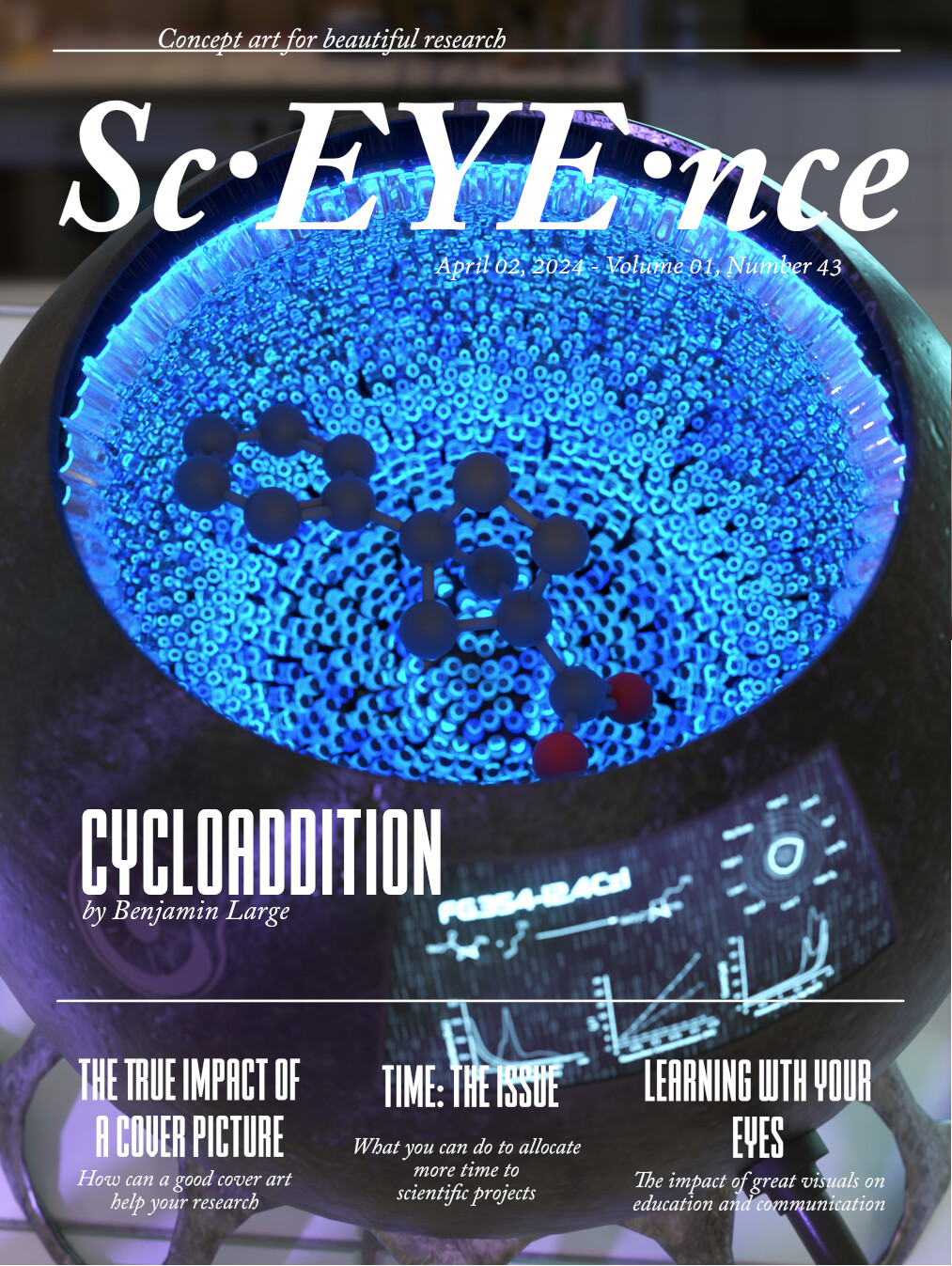
Cycloaddition
This work illustrate a scientific article in which researchers have developed a new method for creating complex chemical structures using a special type of chemical compound called bicyclo[1.1.0]butane (BCB). BCB has a very strained, tightly packed molecular structure, making it highly reactive and a valuable building block in chemistry.
The scientists used light and a photocatalyst to remove an electron from BCB, creating a reactive "radical cation". This process allowed them to initiate a type of chemical reaction called [2π+2σ] cycloaddition, in which the radical cation combines with other simple molecules called alkenes to form new, more complex structures known as bicyclo[2.1.1]hexane (BCH).
One of the key achievements of this work is that it allows these reactions to be carried out with a wide range of alkenes, including those that have previously been difficult to use in similar reactions. This broad compatibility means that the new method has the potential to produce a wide range of chemicals with applications in medicine, materials science and other fields.
The researchers also carried out detailed experiments and used computer simulations to understand how these reactions work at the molecular level. They discovered that the behaviour of the radical cation during the reaction can be predicted based on its structure and interactions with other molecules.
Overall, this study introduces a new way of using BCB to create a variety of complex chemical structures and provides insights into how these reactions occur, paving the way for future applications in chemical synthesis and related fields.