Not Just a Support
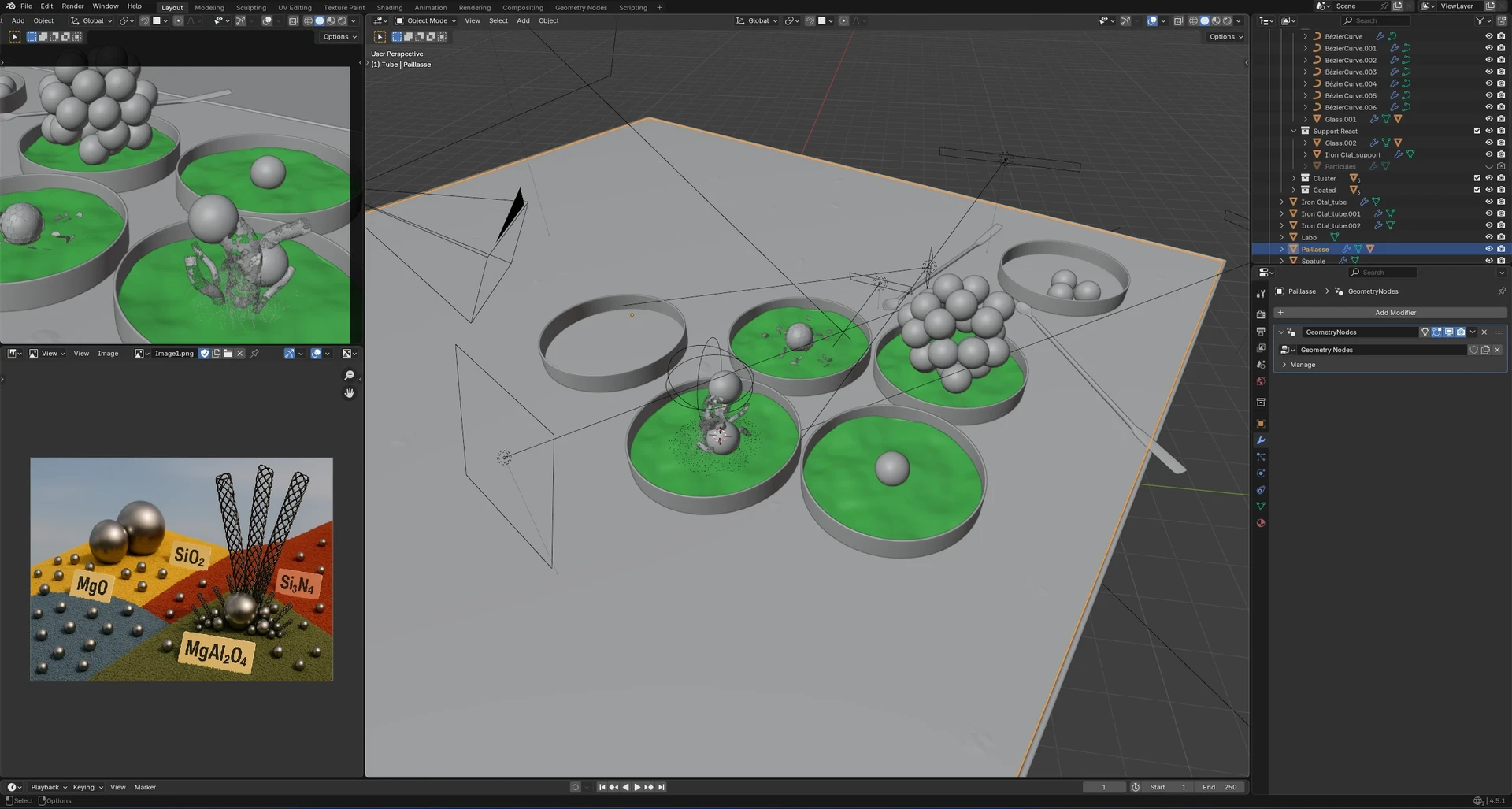
This cover illustrates an article that explores how tiny iron nanoparticles can help break down methane gas, which is an abundant and low-cost resource, into pure hydrogen and carbon nanotube materials. The authors took pre-made iron nanoparticles and placed them onto several types of solid supports (different materials that hold the particles in place) to figure out which ones allow the iron to stay active and create large, high-quality carbon nanotubes, which are valuable for things like electronics and energy storage. The reaction is performed at high temperature and without extra oxygen, aiming for a cleaner way to produce hydrogen fuel without releasing carbon dioxide.
By closely examining how the process works on four support materials (silica (SiO2), magnesium oxide (MgO), silicon nitride (Si3N4), and magnesium aluminate (MgAl2O4))the authors found that the choice of support material is crucial. Some supports, like silica, led to the iron nanoparticles clumping together and getting coated by carbon, which stopped the reaction quickly. Others, such as magnesium oxide and silicon nitride, kept the iron in small clusters but got covered so quickly in carbon or carbon-nitrogen layers that they also did not allow for the formation of long carbon nanotubes.
MgAl2O4 turned out to be different: it not only stabilized the iron nanoparticles so they were less likely to clump or become inactive, but also enabled the formation of long and structured carbon nanotubes. This means that the nature of the material supporting the iron plays a huge role in both how well methane is broken down and what kind of carbon structures are produced. The findings help explain what to look for when creating catalysts for hydrogen production from methane, especially when the goal is to avoid creating carbon dioxide as a byproduct and to produce valuable carbon nanotubes at the same time.
You can read the article here: https://pubs.rsc.org/en/content/articlelanding/2025/ta/d5ta03667d