From Formic Acid to Polyurethanes
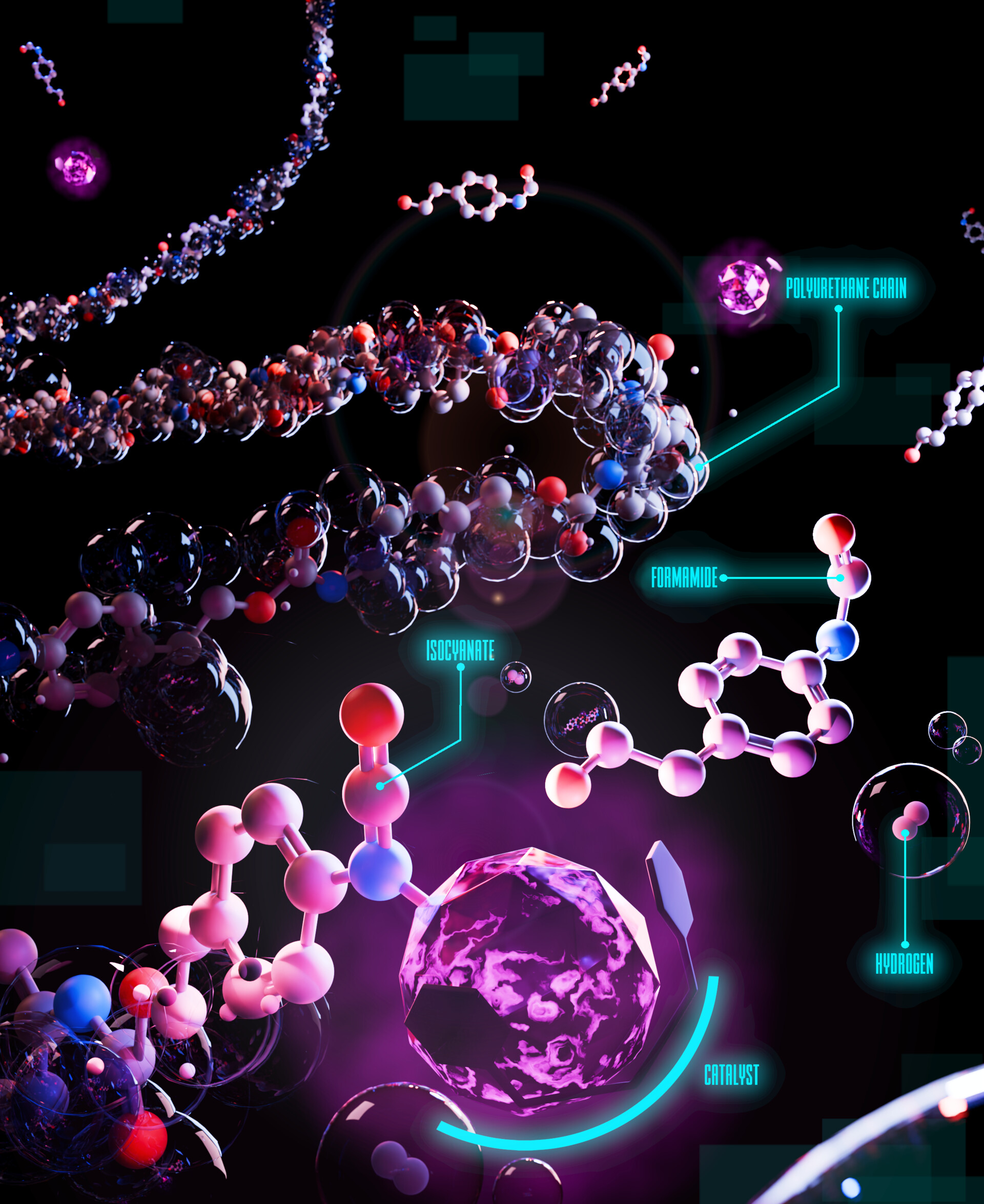
This cover art, made in collaboration with Dr. Johannes Richers was selected as the cover of Macromolecules
(see the issue: https://pubs.acs.org/toc/mamobx/58/4 and the article: https://pubs.acs.org/doi/10.1021/acs.macromol.4c01559)
In this paper, Bernhard Rieger and his team have developed a new method for making polyurethanes, a type of plastic used in various industries. Their approach aims to eliminate the health risks associated with traditional manufacturing processes that use harmful chemicals like isocyanates and phosgene.
The researchers explored a technique called dehydrogenative polyurethane synthesis, which uses iron and ruthenium-based catalysts to combine formamides and alcohols. These starting materials can be easily prepared using formic acid, a less toxic alternative. The team investigated various factors that influence the polymerization process, including the choice of catalyst, the structure of the monomers (starting molecules), and the effects of different solvents.
While the initial experiments produced only short chains of molecules (oligomers), the researchers were able to achieve longer polymer chains under certain conditions. The best results were obtained using a specific ruthenium catalyst with specially designed monomers in a mixture of solvents. This new approach represents a promising step towards more sustainable and safer polyurethane production, addressing both environmental and health concerns associated with traditional methods.